

David Bellos, the British-born translator, scholar and biographer who became the first translator to share the Man Booker International Prize with an author, has died at his home in Doussard in the French Alps, aged eighty. Widely regarded as one of the most influential figures in modern translation, Bellos held a rare place in contemporary letters, bringing world literature into English while helping readers understand the very nature of translation itself.
Writing about Bellos’s legacy is difficult. His work spans diverse fields, from French and comparative literature to experimental and Oulipian fiction, from Balkan political narratives to Holocaust testimony and the shifting textures of multilingual life. The range is striking and makes any single description feel incomplete, yet it reveals the scale of his influence and the depth of his commitment to understanding how works acquire new forms and meanings as they enter different linguistic and cultural contexts.
Perec, Kadare, Gary, Hugo
Bellos’s reputation as a translator was shaped above all by his work on Georges Perec, whose Oulipian structures and linguistic puzzles he brought into English with a clarity that made even the most experimental writing feel natural. His translations of Ismail Kadare, drawn from the author’s closely supervised French versions, played a central role in shaping Kadare’s reception in the English-speaking world.
He worked across strikingly different territories, from the dark wit of Romain Gary’s Hocus Bogus to the historical sweep of Victor Hugo. His translation of Hugo’s final novel, Ninety-Three, completed shortly before his death, is due for publication in 2026. Critics often praised the balance he achieved between precision and narrative energy. His translations aimed for accessibility without compromise, bringing demanding works into English with an ease that concealed the difficulty of the task.
Is That a Fish in Your Ear?
One of Bellos’s most distinctive achievements was his ability to make translation visible to a general readership. This was most evident in Is That a Fish in Your Ear?, published in 2011, a book that offered one of the clearest and most engaging introductions to translation for non-specialist readers. Blending linguistic history, literary analysis and an eye for everyday detail, it explained how translation shapes diplomacy, law, science, technology and the most ordinary acts of communication.
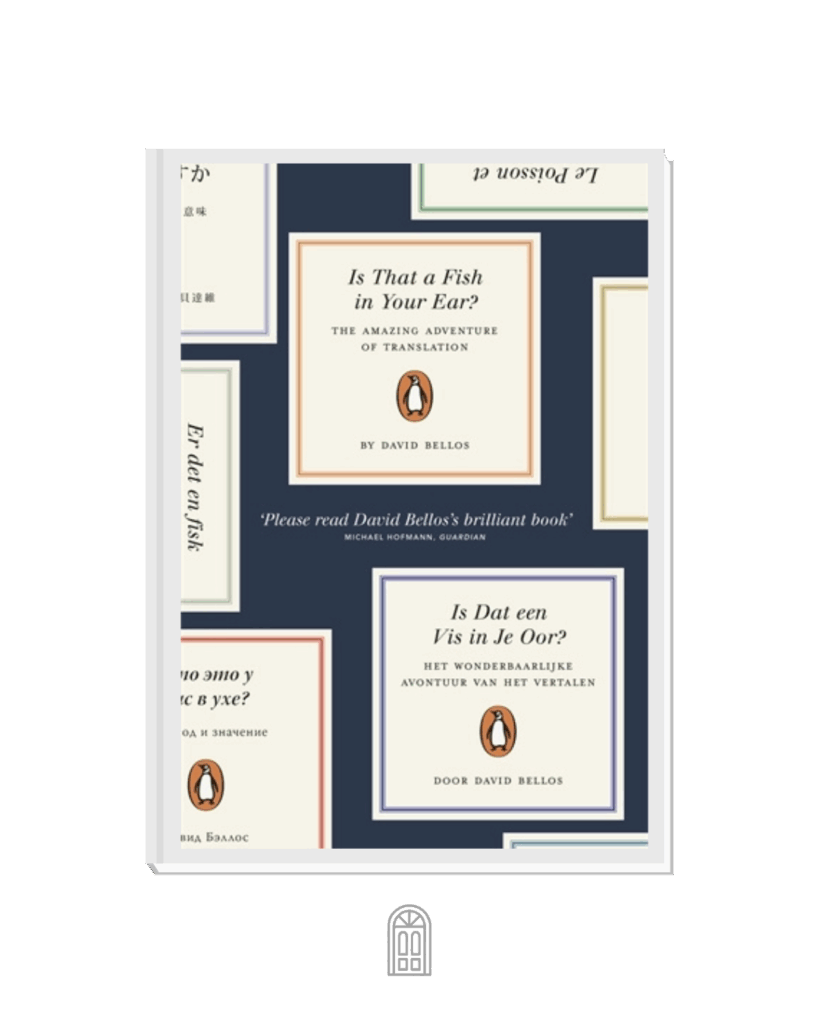
Cover courtesy of the publisher.
Few translators have written a work that reached such a wide audience or shifted attention so decisively from the finished book to the intricate processes behind it. As Michael Hofmann wrote in his Guardian review, “anyone with no interest in translation, please read David Bellos’s brilliant book”. Is That a Fish in Your Ear? made the mechanics of translation intelligible without reducing their complexity, and established Bellos as one of the rare public voices able to speak about translation with both authority and generosity.
The Man Booker Turning Point
In 2005, Bellos became the first translator to share the Man Booker International Prize with an author, an honour he received alongside Ismail Kadare for his English translations of Kadare’s work. Although Bellos did not translate directly from Albanian, he worked from the French versions of Kadare’s novels, which the author closely supervised and often treated as definitive.
The decision to recognise both writer and translator was unusual at the time and drew rare public attention to the creative role of the translator in shaping a book’s final voice. It signalled a shift in how translated literature was understood, suggesting that the text reaching readers was the result of a partnership across languages rather than the work of a single hand. The award has since been regarded as a turning point in public recognition of translation as a creative act in its own right.
David Bellos as Scholar and Biographer
Bellos was also a remarkable scholar, whose biographical and critical work matched the breadth of his translations. His study Georges Perec: A Life in Words, which won the Prix Goncourt de la Biographie, remains one of the most influential accounts of Perec’s life and literary imagination. He continued to bridge scholarship and storytelling in The Novel of the Century, his widely admired exploration of Les Misérables and the world that produced it.
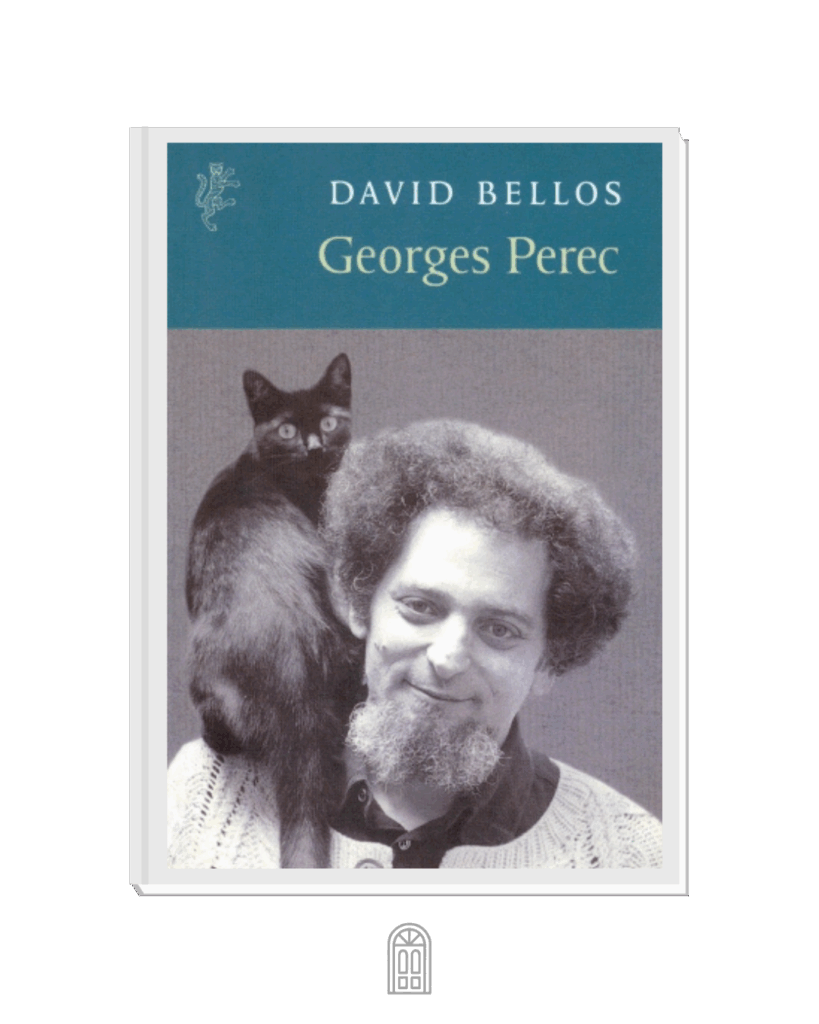
Cover courtesy of the publisher.
His most recent book, Who Owns This Sentence? (2024), examined the tangled histories of language, authorship and copyright with the same curiosity and clarity that defined his teaching. Across these works, Bellos demonstrated a rare ability to turn dense literary and historical research into writing that spoke to non-specialist readers, offering insight without ever losing the pleasure of narrative.
The Teacher Behind a Generation of Readers
Teaching was at the heart of Bellos’s work, long before he arrived at Princeton. After completing his doctorate at Oxford, he taught at Oxford, Edinburgh, Southampton and Manchester, shaping generations of students in the UK before moving to the United States in 1997.
At Princeton he became known for the weekly translation lunches he hosted, gatherings that brought together translators and students at every stage of learning, and turned shared linguistic puzzles into moments of insight and conversation. His classrooms were defined by clarity, humour and intellectual generosity, qualities that made even difficult ideas feel accessible. His courses, whether on translation, European prose or the shifting realities of multilingual life, reshaped how many students understood literature and the act of reading itself.
A Legacy That Continues to Speak
News of Bellos’s death became public on 14 November, and the days that followed were marked by a noticeable quiet. It was the kind of silence that often surrounds translators, yet surprising in the case of someone whose work had such a wide and lasting influence on world literature in English.
This reflects a point Bellos often made about translation’s place in culture: that much of its labour happens out of sight, carried by people whose names remain unknown to most readers. His passing invites reflection on that quietness, and on the way significant acts of translation often unfold without fanfare, rarely accompanied by the public recognition given to other forms of literary creation.
Bellos’s legacy lives on in the works he translated, the studies he wrote and the students whose thinking he shaped. What remains now is the many worlds he opened for readers. It is a legacy that continues to speak, even in the quiet that follows his passing.


Thank you for this tribute to David Bellos. Richly deserved.
Thank you so much, Ros. That means a lot.